
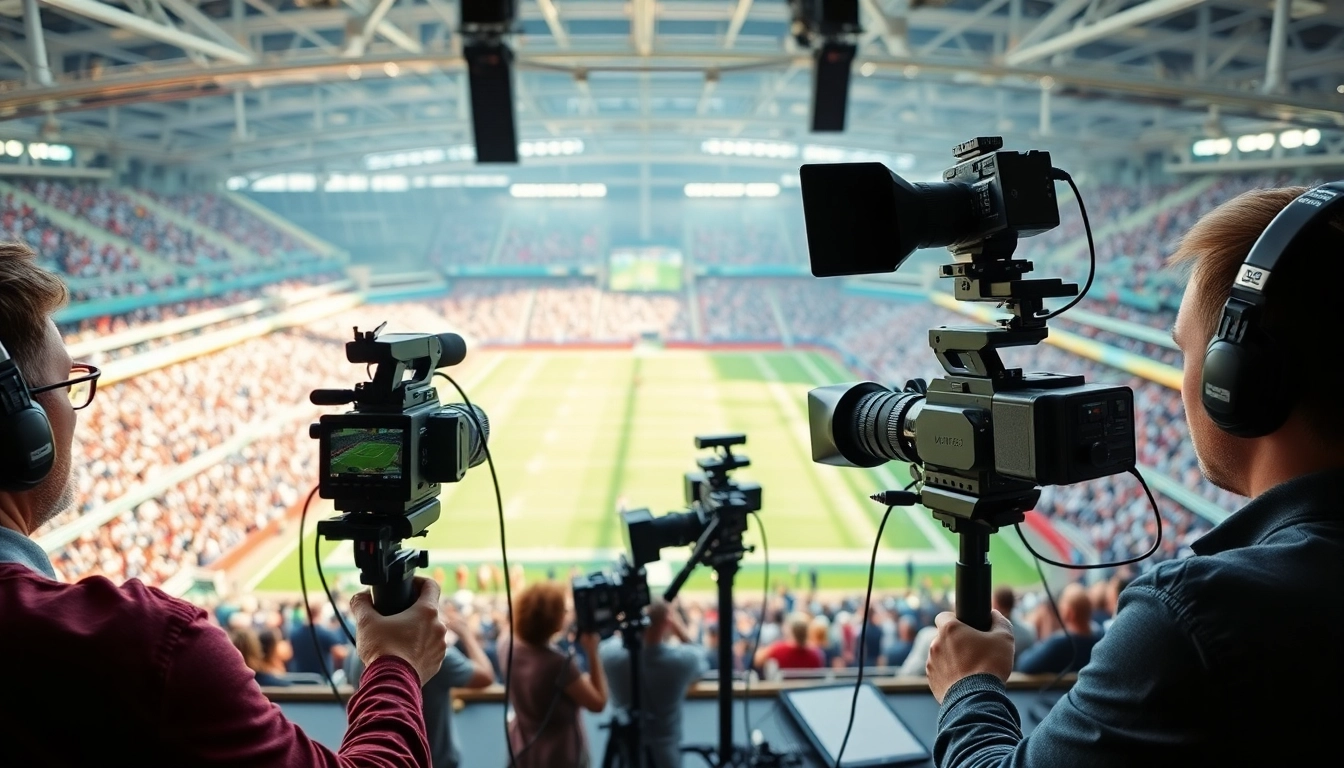
Understanding the Basics of Sports Broadcasting
What is Sports Broadcasting?
Sports broadcasting encompasses the production and transmission of sports content to an audience via various platforms. This includes live telecasts, radio broadcasts, online streaming, and social media coverage. The goal is to provide fans with access to sporting events, highlights, analyses, and interviews. With the rise of digital services, the scope of Sports Broadcasting has expanded considerably, accommodating diverse formats and innovative content strategies tailored to audience preferences.
The Importance of Sports Broadcasting
Sports broadcasting plays a crucial role in the sports ecosystem, serving both fans and organizations. It fosters community engagement by connecting fans to their favorite teams and athletes, thereby contributing to the overall popularity of sports. Moreover, effective broadcasting enhances the financial viability of sporting events through advertising revenue and sponsorships. By offering comprehensive coverage, broadcasters create a platform for athletes to gain wider recognition and for the sports themselves to reach new audiences.
Key Roles in Sports Broadcasting
A skilled sports broadcasting team comprises various roles, each vital in delivering high-quality content. The primary roles include:
- Producers: Oversee the entire production, ensuring that everything from the script to the visuals is executed flawlessly.
- Commentators: Provide real-time analysis and commentary during events, enriching the viewer’s experience.
- Reporters: Gather and present stories on and off the field, conducting interviews and reporting on key issues.
- Directors: Manage camera angles and visual elements to ensure that the broadcast is engaging and visually appealing.
Techniques for Effective Sports Broadcasting
Camera Angles and Shot Composition
Effective sports broadcasting relies significantly on camera work and shot composition. Strategic camera angles can enhance dramatic moments and provide audiences with a more immersive experience. For example, close-up shots can capture athletes‘ emotions, while wide-angle shots establish the game’s atmosphere. Directors must plan these angles in advance, considering how they can best engage the audience at home.
Commentary Style and Audience Engagement
Commentary does more than narrate the action; it builds excitement and fosters connection. Broadcasters should adopt a tone that reflects the sport’s nature — some events may call for high-energy commentary, while others might require a more subdued and analytical approach. Engaging with audiences through social media and live polls can also enhance viewer interaction, making broadcasts feel more personal and inclusive.
Using Graphics and On-Screen Stats
Incorporating graphics and statistics enriches the viewer experience, providing important context to the action. Modern sports broadcasts utilize advanced data visualizations to illustrate player statistics, team performance, and in-game analytics. By showing this information in real-time, broadcasters can offer viewers deeper insights and a richer understanding of the game.
Tools and Equipment for Sports Broadcasting
Essential Gear for On-Site Reporting
On-site sports broadcasting requires specialized gear to capture high-quality audio and video. Essential equipment includes high-definition cameras, tripods, and stabilizers for dynamic shots. Portable lighting solutions and green screens can also enhance the quality of remote broadcasts. Additionally, broadcasters should invest in reliable transmission equipment to ensure seamless connectivity.
Software for Streaming and Editing
Professional broadcasting also involves powerful software applications for editing and streaming. Programs such as Adobe Premiere Pro, Final Cut Pro, and OBS Studio enable broadcasters to create polished content post-event. Features like live graphics insertion and real-time video editing are crucial for maintaining the broadcast’s pace and quality, particularly during live events.
Audio Equipment for Clear Communication
Clear communication is pivotal in sports broadcasting. Invest in high-quality microphones, such as lavalier and shotgun mics, for crisp audio capture. Additionally, using digital audio mixers allows for professional-grade sound management, especially in crowded venues. The right audio gear ensures that every commentary and interview can be clearly heard above the crowd noise.
Trends in Sports Broadcasting
Emerging Technologies to Watch
Technological advancements are reshaping the landscape of sports broadcasting. Virtual reality (VR) and augmented reality (AR) are making waves, offering immersive viewing experiences that allow fans to feel like they’re present at the event. Additionally, advancements in high-definition streaming, such as 4K and 8K formats, are becoming more accessible, providing superior image clarity.
Shifting Audience Preferences
Today’s viewers demand more than just live coverage; they crave interactive experiences like behind-the-scenes access and personalized content. Services that allow viewers to choose specific camera angles or provide commentary available in multiple languages are gaining traction. Catering to these preferences is key for broadcasters aiming to maintain relevance in a competitive environment.
The Rise of Social Media in Broadcasting
Social media has revolutionized how sports are consumed, allowing fans to interact directly with networks, teams, and athletes. Platforms like Twitter, Instagram, and TikTok are not merely supplementary; they serve as primary channels for disseminating highlights, news, and real-time updates. Integrating social media content into broadcasts enhances engagement and extends the reach of sports programming.
Performance Metrics in Sports Broadcasting
Analyzing Audience Reach and Engagement
Understanding audiences is critical for sports broadcasters. Metrics such as viewership numbers, average watch time, and audience demographics provide insights into what content resonates with viewers. Tracking audience engagement through comments, shares, and likes can guide future content strategies, ensuring that broadcasters continuously meet viewer expectations.
Feedback Loops and their Importance
Establishing effective feedback loops is vital for improvement. Collecting data through surveys or monitoring social media feedback helps broadcasters refine their product. Initiating discussions or polls during broadcasts can also create a dialogue, allowing audiences to express their views and preferences, which can directly inform programming choices.
Adapting Strategies Based on Metrics
Data-driven decision-making enhances the effectiveness of sports broadcasts. By analyzing metrics and adjusting strategies accordingly, broadcasters can introduce new formats, improve pacing, and address viewer interests more effectively. Emphasizing agility in response to performance data allows for not only maintaining relevance in a fast-changing media landscape but also for proactively improving audience satisfaction.
Frequently Asked Questions
What are the key skills needed for sports broadcasters?
Key skills include strong communication, a deep understanding of sports, sharp analytical thinking, and the ability to engage an audience. Technical skills in production and software use are also critical.
How does sports broadcasting impact viewership?
Sports broadcasting enhances viewership by delivering high-quality, accessible content that connects fans with their favorite teams, often increasing loyalty and engagement.
What trends are currently shaping sports broadcasting?
Emerging trends include the use of VR and AR, tailored content experiences, and the integration of social media, all of which cater to evolving audience preferences.
How can technology improve sports broadcasting?
Technology enhances quality through advanced streaming options, real-time data analytics, and immersive experiences, providing deeper insights and engagement options for audiences.
What metrics should broadcasters focus on for success?
Broadcasters should focus on viewership statistics, engagement metrics, audience demographics, and content performance analytics to gauge success and adapt strategies effectively.